

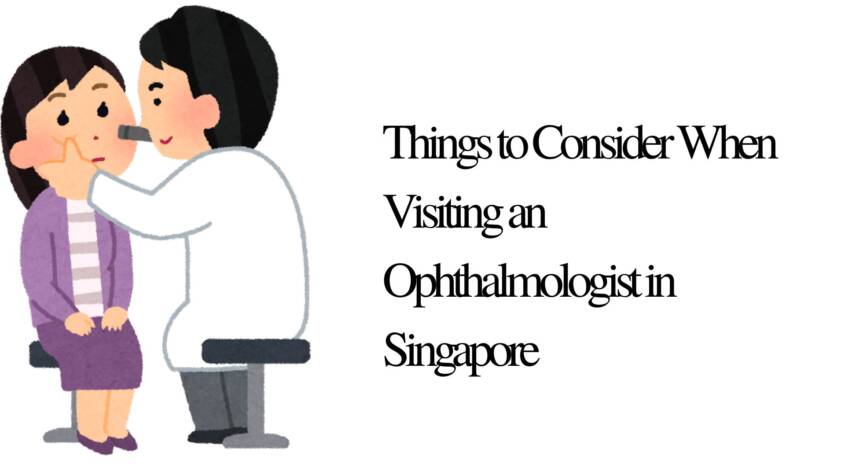
If you need expert medical or surgical eye care, you should visit an ophthalmology clinic in Singapore. In this guide, we explain the typical process so that you know what to expect and prepare for your visit if you’ve never been to one before.
Should You See an Ophthalmologist or Optometrist?
It’s important to figure this out first. To explain the difference between the two:
- Ophthalmologist – A medical doctor who has undergone extensive training to diagnose and treat eye diseases, as well as perform eye surgery.
- Optometrist – Not a medical doctor, but a doctor of optometry who provides routine eye care, performs vision tests, and prescribes corrective lenses.
Sudden and severe vision changes or problems, as well as chronic eye conditions, merit a visit to the ophthalmologist, not the optometrist. You may be referred to an ophthalmologist via a referral letter from your GP or a polyclinic.
Choosing a Specialist
To choose an ophthalmologist, focus on their area of expertise or subspecialty. This tells you what the doctor specialises in diagnosing or treating.
For example, common subspecialties for ophthalmologists in Singapore include retinal health, glaucoma, and corneal health. If you already have a general idea of which condition you may have, selection based on this will be easier.
You should also check if the doctor is registered with the Singapore Medical Council (SMC). Additionally, inquire about the doctor or clinic’s fee structure.
This is because rates vary dramatically, especially when you start comparing private and public healthcare providers.
Financial Considerations
MediSave is usually available for approved surgical procedures on the eye and certain outpatient treatments. However, it’s rarely available for routine consultation fees or basic tests.
To be safe, clarify with your chosen provider or clinic beforehand which of the procedures you may need are MediSave-claimable. You should also ask about the withdrawal limits for those specific procedures.
If you have an Integrated Shield Plan (IP), check whether your chosen specialist is on your insurer’s panel. If not, your out-of-pocket expenses may go up significantly.
Finally, consider follow-up requirements if you have or suspect you have a chronic condition that requires long-term monitoring. This will affect your overall expenses.
Preparing for the Appointment
Most ophthalmologists will want to perform comprehensive eye exams on patients. This helps them assess overall eye health and better diagnose potential issues.
These comprehensive eye examinations can be time-consuming, with some taking around 2 hours. First appointments may even take longer than that, especially at public hospitals.
You can make things easier for yourself by ensuring you have all the relevant documents in hand, even before you go to the hospital or clinic. Here are the documents to bring:
- Your National Registration Identity Card or NRIC
- Your referral letter, if any
- Prior medical reports and scans
- A list of your current medications
- A list of your symptoms
- A list of questions you may have for the doctor
As for physical preparation, patients who use contact lenses should use their glasses on the day of the appointment. You should also try to have someone accompany you to the appointment.
This is because you will likely be given dilating eye drops for the part of the exam where your ophthalmologist in Singapore inspects your retina and optic nerve. These cause your pupils to enlarge, which may blur your vision and make you sensitive to light for a few hours.
As such, you should not drive yourself to and from the appointment. You should have a companion for safety, and also bring sunglasses to better cope with the temporary increase in light sensitivity.
Who Decides Warr Hoodie Style Guide for Beginners
The Warr hoodie sits in a special place within urban design culture. Its design comes from…

A Full-Service Print Shop Specializing in Digital and Offset Printing
Printing looks simple—until it isn’t. Anyone who has rushed to a print shop near …