

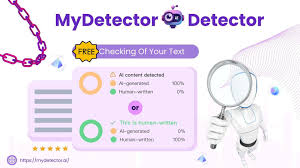
The Digital Shift That Changed How We Write
Artificial intelligence has transformed content creation at a speed no one predicted. From marketing copy to academic drafts, AI-generated text is now everywhere. While this innovation brings efficiency, it also raises a serious question: how do we distinguish human writing from machine-generated content?
This is where ai detector becomes an essential digital safeguard.
What Is an AI Detector and Why It Exists
An AI detector is a specialized analytical tool designed to evaluate written content and identify patterns commonly associated with artificial intelligence. Unlike basic plagiarism tools, an AI detector does not search for copied text. Instead, it studies writing behavior, sentence construction, probability patterns, and linguistic predictability to determine whether content is likely human-written or AI-assisted.
Its purpose isn’t punishment—it’s verification, transparency, and quality control.
How an AI Detector Thinks Differently
Rather than matching text with databases, an AI detector works on a deeper level. It examines:
- Sentence rhythm and variation
- Word predictability and repetition
- Structural uniformity versus natural inconsistency
- Contextual flow across paragraphs
Human writing is naturally imperfect. AI-generated text often appears overly balanced or statistically predictable. An advanced AI detector recognizes these subtle differences with remarkable precision.
Who Uses AI Detectors Today
AI detectors are no longer limited to classrooms. They are actively used by:
- Content marketing agencies maintaining brand authenticity
- SEO professionals protecting organic rankings
- Academic institutions ensuring original submissions
- Publishers filtering automated submissions
- Businesses reviewing outsourced content
In each case, the AI detector acts as a quality gate, not a creative barrier.
AI Detector vs Plagiarism Checker: Not the Same Tool
A common misconception is that an AI detector and a plagiarism checker serve the same purpose. They don’t.
- A plagiarism checker identifies copied material
- An AI detector identifies how the content was created
Content can be 100% original and still AI-generated. That distinction matters more than ever.
Why Search Engines Care About AI Detection
Search engines increasingly prioritize content value and authenticity. While AI-generated content isn’t automatically penalized, low-quality, mass-produced material is.
Using an AI detector helps publishers ensure their content:
- Sounds natural and human
- Adds real informational value
- Avoids robotic or ai detector repetitive phrasing
- Maintains long-term SEO credibility
This proactive approach protects websites from algorithmic volatility.
The Future Role of AI Detectors
As AI writing tools evolve, AI detectors will become more refined—not to block creativity, but to balance innovation with integrity. The future isn’t about banning AI; it’s about responsible usage.
Tomorrow’s AI detector will likely measure collaboration—how humans and AI work together—rather than enforcing a rigid divide.
Choosing the Right AI Detector for Your Needs
Not all AI detectors are created equal. When selecting one, consider:
- Accuracy over exaggerated certainty
- Transparency in scoring methods
- Support for long-form content
- Regular model updates
- Clear human-readable reports
A reliable AI detector should inform decisions, not confuse them.
Final Thoughts: Authenticity Still Wins
Technology will continue to reshape content creation, but authentic human perspective remains irreplaceable. An AI detector doesn’t threaten creativity—it protects it.
By using an AI detector wisely, creators, educators, and businesses can confidently publish content that is original, credible, and future-ready.
For the Information: Click Here
Who Decides Warr Hoodie Style Guide for Beginners
The Warr hoodie sits in a special place within urban design culture. Its design comes from…
A Full-Service Print Shop Specializing in Digital and Offset Printing
Printing looks simple—until it isn’t. Anyone who has rushed to a print shop near …